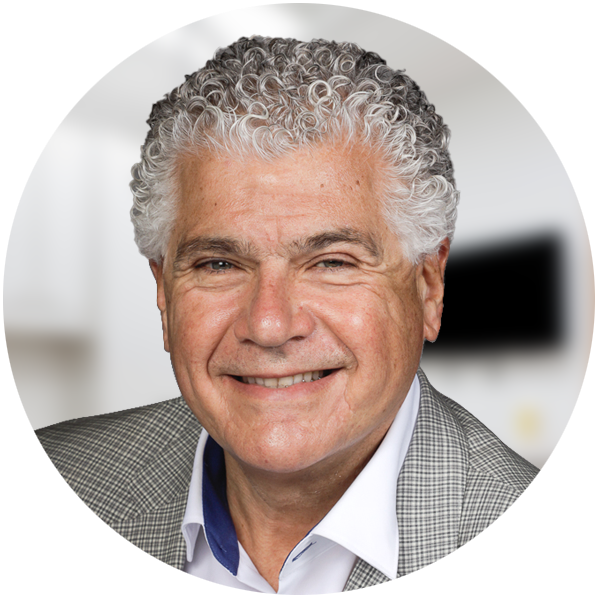
Dennis Marangos
BSc, DDS, FAGD
“I Don’t Want to Be a Single Tooth Dentist Anymore” From Direct to Indirect: Modern Composite and Ceramic Dentistry
DAY 3 - Saturday, January 16 | 8:00AM - 10:00AM | 2 CE Credits
About Dr. Marangos
Dr. Dennis Marangos graduated from the University of Toronto, Faculty of Dentistry in 1986. He completed a General Practice Residency at Mount Sinai Hospital in Toronto in 1987 and currently maintains a private practice in Toronto with emphasis on aesthetic, restorative dentistry and orthodontics.
He is the principal dentist at the Yorkville TMJ Centre, a practice that focuses on management of head, neck and TMJ related pain as well as obstructive sleep apnea and snoring. Dr. Marangos has lectured and presented hands-on workshops for many groups and study clubs on restorative dentistry, orthodontics, the management of TMD and craniofacial pain, direct and indirect restorative dentistry, biometrics, and occlusion.
Course Outline
Every day in practice, dentistry falls into the same pattern—teeth are treated in isolation, compromises are accepted as “good enough,” and patients leave with solutions that function, but rarely perform at their true potential. This isn’t a skill issue—it’s a systems issue rooted in single-tooth thinking.
In this program, Dr. Marangos directly challenges that mindset and redefines how restorative dentistry is approached. By bridging direct and indirect techniques through simplified, evidence-based systems, he demonstrates how to eliminate guesswork, improve efficiency, and elevate outcomes across everyday restorative care. From anterior composites to posterior Class II restorations, adhesive protocols to indirect case selection, this session delivers practical, immediately applicable strategies designed to transform how you plan, execute, and think about dentistry.
The focus is not on doing more dentistry, but on doing the right dentistry with greater clarity, efficiency, and consistency.
Learning Objectives
- Apply simplified adhesive and composite protocols to achieve predictable, esthetic restorative outcomes
- Streamline anterior composite workflows to improve consistency, efficiency, and clinical predictability
- Achieve precise Class II contacts and contours using modern matrix systems and simplified techniques
- Adopt a system-based approach to treatment planning that integrates direct and indirect dentistry for more comprehensive, outcome-driven care